
Specialized vs. Commodity Footwear: Why Technical Categories Can't Be Manufactured the Same Way

Updated: Jul 2
Any footwear factory can make a shoe. Far fewer can make a shoe that has to do something — stop a slip on a wet kitchen floor, protect a toe on a job site, stay dry through a hunting season, or hold up to the repetitive load of a performance sport. The moment a shoe carries a functional claim, it stops being a commodity and becomes an engineering problem.
Treating specialized footwear like commodity footwear is one of the costliest assumptions a brand can make. The product looks similar on a spec sheet. It behaves completely differently in production, in testing, and in the field. This article explains the real difference, why it changes how you manufacture, and what to demand from a partner before production starts.

The difference is the claim
Commodity footwear competes mostly on price, style, and basic comfort. The performance bar is low and forgiving: if the shoe is comfortable enough and priced right, it succeeds.
Specialized footwear competes on a functional promise. That promise — slip resistance, impact protection, water resistance, durability under load — is a measurable outcome the product must actually deliver. And a measurable outcome has to be engineered into materials, construction, and tooling. It cannot be added as a finish or a marketing line.
This is the core principle: specialized footwear claims must be engineered, not marketed. A "non-slip" caption means nothing without an outsole compound and tread geometry validated against a recognized test method. Safety performance is a documentation and testing question before it is a sales question.
What "specialized" actually covers
Specialized and technical footwear spans many categories, each with its own failure modes:
Safety / occupational — toe protection, puncture resistance, electrical hazard considerations. In the U.S., protective footwear is typically evaluated against ASTM F2413 test criteria under OSHA's framework. (HexArmor)
Slip-and-fall / slip-resistant — outsole performance on wet, oily, or contaminated surfaces. ASTM F3445 is the U.S. specification for slip-resistant footwear, tested via the ASTM F2913 method. (HexArmor)
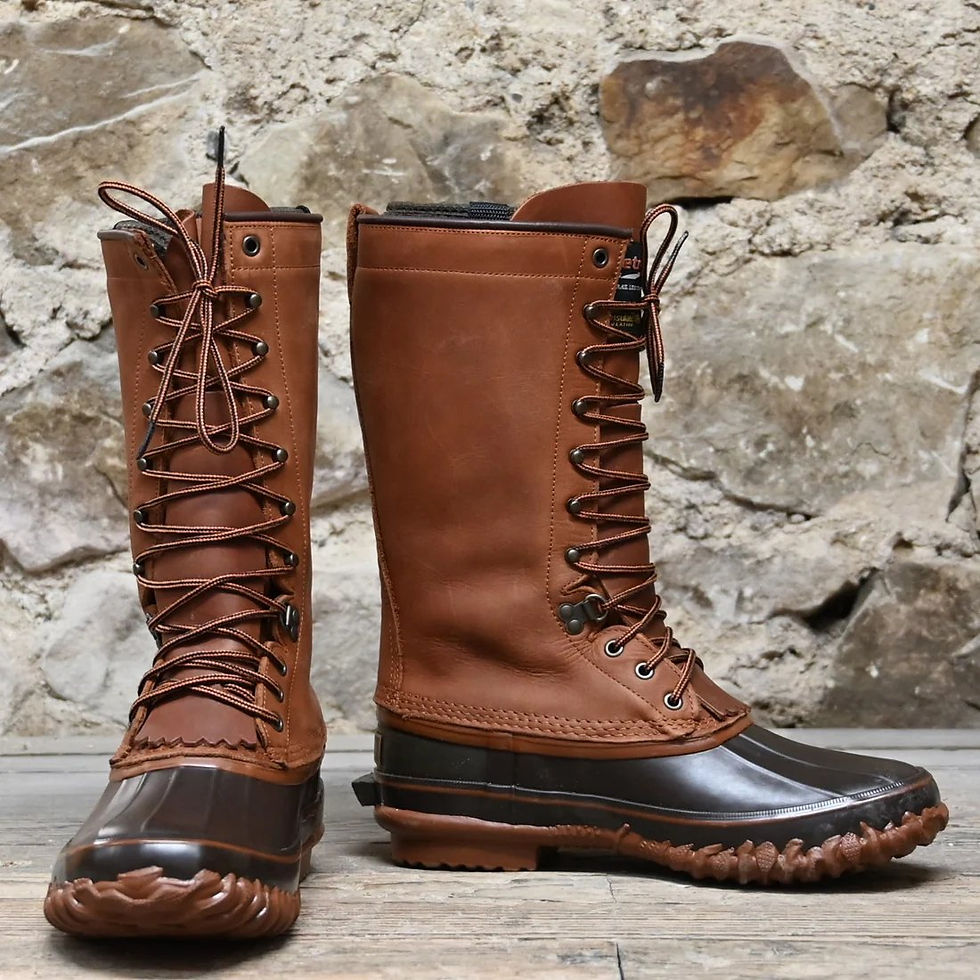
Outdoor / hunting — water resistance, abrasion resistance, thermal and terrain durability.
Performance — repeated load, energy return, fit precision, and wear consistency.
Roofing, kitchen, nursing, hospitality, golf, pickleball, industrial — each with a distinct use case that drives material and construction choices.
Note on standards: references to ASTM, OSHA, or any certification describe general industry requirements. Whether a specific product meets a specific standard is a testing-and-documentation question that must be reviewed during technical evaluation. Abucombal does not assert that any product is certified or compliant without that review.
Why specialized footwear needs review before production
In a commodity shoe, a wrong assumption is a comfort complaint. In a specialized shoe, a wrong assumption can be a failed function — and in safety categories, a liability.
That raises the cost of every decision made before production:
Material selection is functional, not cosmetic. The outsole compound that passes a slip test, the membrane that keeps water out, the upper that survives abrasion — these are performance components. Substituting a "similar" material can quietly break the claim.
Construction method drives durability. How the shoe is assembled determines whether it survives the repeated stress its category demands. The right method is category-specific.
Tooling is a commitment. Outsoles often require dedicated tooling. Getting the geometry and compound right before tooling is built avoids expensive rework.
Standards have to be designed in. If a product needs to meet a recognized test method, that requirement shapes materials and construction from the start. It cannot be retrofitted at the end.
This is why the right manufacturer challenges the product before production starts. A factory that simply says yes to a technical spec, without reviewing whether the materials and construction support the claim, is transferring risk to your brand.
Why "we make all kinds of shoes" is a warning, not a reassurance
Breadth is not the same as depth. A manufacturer that claims it can produce any footwear category is signaling generalist capability — which is fine for commodity product and risky for technical product.
For specialized footwear, category fit is the first filter. You want a partner that understands the specific failure modes of your category, has worked with the relevant materials and constructions, and can tell you what your tech pack is missing. Depth in your category beats breadth across all of them.
How to evaluate a specialized footwear manufacturer
Before committing, confirm:
Category experience. Have they developed and produced footwear in your specific category, with its specific performance requirements?
Technical review process. Do they review materials, construction, tooling, and applicable standards before quoting?
Standards literacy. Do they understand the relevant test methods and treat compliance as a documentation issue to be reviewed — not a claim to be asserted?
Material judgment. Can they evaluate whether your specified materials actually support the functional claim?
Sample-to-production discipline. Can they explain how a validated sample becomes consistent output at volume?
Honest constraints. Do they tell you what they cannot do? A partner that names its limits is protecting your product.
The development stage is the real risk-control layer
Most specialized footwear problems do not start on the production floor. They start earlier — incomplete tech packs, unclear materials, untested outsole assumptions, unrealistic cost targets, and missing feasibility checks. For technical footwear, development is not a formality. It is the first layer of risk control.
A feasibility-first manufacturer treats the development stage as where the product is de-risked: technical intake, documentation review, BOM research, project analysis, and grounded estimates — before any commitment to volume. The goal is to surface every functional risk while it is still inexpensive to solve.
What goes wrong when specialized footwear is treated as commodity
The failure pattern is consistent across categories, and it almost always traces back to a decision made before production:
The "equivalent material" substitution. A sourcing team swaps a specified outsole compound or membrane for a cheaper, visually similar option to hit a cost target. The shoe looks identical and fails the function — a slip-resistant outsole that no longer passes its test method, or a waterproof boot that wicks.
The untested outsole assumption. Tooling gets built around a tread geometry that was never validated against the actual use surface. The fix arrives after the tooling cost is already spent.
The retrofitted standard. A brand decides late that a product should meet a recognized test method, after materials and construction are locked. Standards designed in from the start are cheap; standards bolted on at the end are expensive or impossible.
The good sample, bad run. A flawless prototype gets approved, but the controls needed to reproduce it at volume were never defined. Production output drifts from the sample that was sold.
Each of these is a development-stage gap that surfaced as a production-stage disaster. The categories differ, but the root cause is the same: technical product evaluated with a commodity mindset.
Frequently asked questions
What is specialized footwear manufacturing?
It is the development and production of footwear that carries a functional requirement — such as slip resistance, impact protection, water resistance, or durability under load. Unlike commodity footwear, the performance claim must be engineered into materials, construction, and tooling and validated through testing.
How is specialized footwear different from regular footwear manufacturing?
Regular (commodity) footwear competes mainly on price, style, and basic comfort. Specialized footwear has to deliver a measurable function, which raises the stakes on material selection, construction method, tooling, and applicable standards — and requires technical review before production.
What standards apply to safety and slip-resistant footwear?
In the U.S., protective footwear is commonly evaluated against ASTM F2413 under OSHA's framework, and slip-resistant footwear against ASTM F3445 (tested via ASTM F2913). Whether a specific product meets a specific standard must be confirmed through testing and documentation during technical evaluation. (HexArmor)
Can any footwear factory make technical or safety footwear?
Not reliably. Specialized footwear requires category understanding, material clarity, product development discipline, and technical evaluation. Breadth across all categories is not the same as depth in yours.
Why does material selection matter so much in technical footwear?
Because materials are functional components, not finishes. The outsole compound, membrane, or upper material is often what delivers the performance claim. Substituting a similar-looking material can break the function the product is sold on.
Specialized footwear requires specialized manufacturing
If your product makes a functional promise, the manufacturer behind it has to be able to engineer that promise — and prove it through process, not marketing. That starts with a technical review of the product, not a quote.
Abucombal focuses on specialized footwear for U.S. and Canadian brands from León, Guanajuato, and begins every project by evaluating whether the product, materials, tooling, and standards are feasible before production.
Start with a technical feasibility review. Share your product details so the category, materials, and standards can be evaluated. Tell us about your footwear production needs →
About Abucombal
Abucombal is an OEM and ODM specialized footwear manufacturer based in León, Guanajuato, Mexico, serving U.S. and Canadian brands. We pair technical product development, automated cutting and stitching, and 100% material traceability with nearshore advantages — next-day border delivery, faster lead times, and flexible MOQs. Our pillars: Creativity, Technology, and Sustainability.
Related reading:


Comments